
Rain In The Hills Fills Chandigarh’s Sukhna Lake To The Brim
Floodgates May Open; Panchkula And Mohali Alerted.

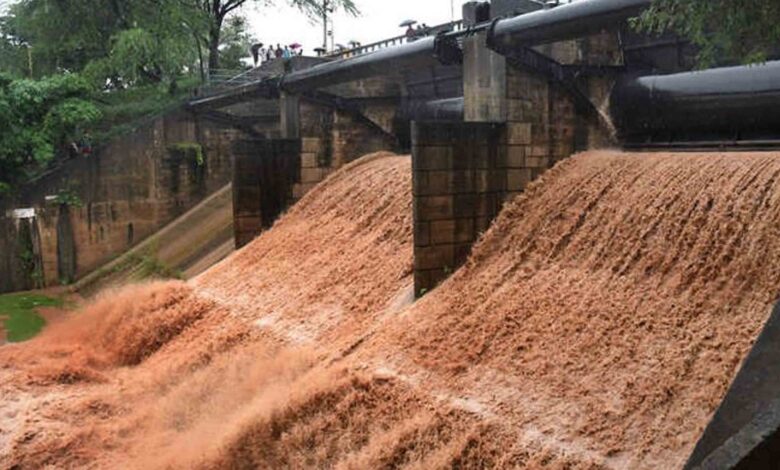
The cracks caused by drought in Sukhna Lake Chandigarh’s lifeline have been filled, and the lake is now on the verge of overflowing due to rainwater. Continuous rainfall in the Shivalik hills is channeling water through the Sukhna catchment area into the lake, raising its water level to 1,158.5 feet.
The Meteorological Department has forecast heavy rain over the next two to three days. In response, the Chandigarh administration is on alert, and alerts have also been issued to the administrations of Panchkula and Mohali. Additionally, populated areas near the Sukhna Choe (seasonal stream) have been warned.
Round-the-clock monitoring is being conducted via CCTV cameras at the Sukhna regulatory end, and the Engineering Department has deployed a team to stay vigilant. Although the lake’s floodgates are designed to open at a level of 1,163 feet, the 1,162.5-foot mark is considered the danger level.
Even though there is currently a margin of about four feet, heavy rainfall can cause the water level to rise by that amount in just a few hours. Anticipating this, the administration has initiated preparations alongside issuing alerts.
Floodgates To Open At The Danger Mark.
The floodgates will be opened before the water reaches its absolute peak level. This is because opening them at the very last moment would necessitate releasing a massive volume of water all at once. Such a surge would cause the water to slam against structures downstream, including the Bapudham bridge, the Industrial Area, and the Baltana bridge in Mohali.
This poses a risk of flooding in populated areas an issue that has occurred in the past. However, if rainfall becomes excessive, opening the floodgates wider becomes unavoidable.
In the past, the release of large volumes of water caused damage to railings on various bridges and even broke water pipelines on the Bapudham bridge. Additionally, the Baltana police post was submerged in floodwaters. Now, as a precautionary measure, there is a plan to release the water gradually by opening the floodgates slightly.
Increased Water Capacity At The Regulatory End
This time, the regulatory end of Sukhna Lake had dried up significantly. Furthermore, dry patches had begun to appear in various parts of the main lake as well. The administration undertook desilting operations at the regulatory end, which has increased its water-retention capacity by more than five meters.
However, desilting could not be carried out for the lake itself. Years ago, in 2016, a large section of Sukhna Lake had dried up severely, with cracks appearing in the bed. The situation became so critical that water had to be pumped into the lake from tubewells; however, operating multiple tubewells for such a vast lake made little difference.